
 +65 64766821
Get In Touch
+65 64766821Book An Appointment

TCA CROSS in Singapore

Dr Koh Hong Yi
Senior Consultant Dermatologist
 MBBS (Singapore), MRCP (UK), MMed (Internal Medicine), FAMS (Dermatology)
Dr Tham Siew Nee
Senior Consultant Dermatologist
MBBS (Adelaide), MMed (Internal Medicine), FAMS (Dermatology)TCA CROSS (Trichloroacetic Acid Chemical Reconstruction of Skin Scars) is a specialised, targeted dermatological technique designed to manage atrophic acne scarring—a condition where the skin's dermal architecture is permanently altered, resulting in deep, depressed pits. Because these scars involve a significant loss of collagen and local tissue volume, they often resist traditional topical creams or surface-level chemical peels. Effective management requires a sophisticated understanding of scar morphology and a commitment to controlled, clinical interventions.
Although deep scarring can be challenging, these structural irregularities can be significantly improved through a modern, focal dermatological approach. Success in treatment relies on three core pillars: an accurate clinical diagnosis of the specific scar type, precise delivery of high-concentration trichloroacetic acid into the scar base, and a carefully structured treatment plan that supports gradual dermal remodelling over time.
When performed correctly, TCA CROSS creates a controlled injury within the scar, triggering the skin’s natural healing response and progressive collagen regeneration. Over a series of treatments, this leads to visible softening of scar depth and improved skin texture. As with all advanced dermatological procedures, outcomes depend on practitioner expertise, appropriate patient selection and adherence to post-treatment care.



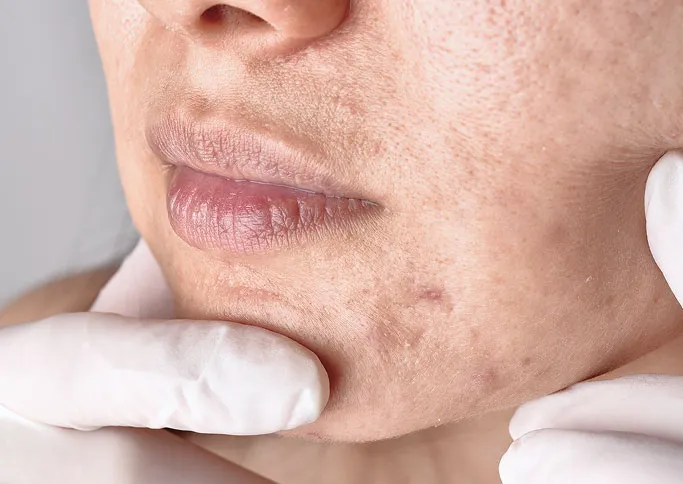
What Is TCA CROSS?
TCA CROSS is a medical-grade dermatological procedure used to treat atrophic acne scars, particularly deep, narrow ice-pick and boxcar scars. Unlike traditional chemical peels applied across the entire skin surface, this technique is performed at the level of individual scars.
A high-concentration trichloroacetic acid solution is carefully applied to the base of each depression, creating a controlled chemical injury that extends into the deeper dermis. This stimulates a localised wound-healing response, encouraging new collagen formation and gradual elevation of the scar floor. As healing progresses, the depth and visibility of these structural imperfections are significantly reduced.
What Are TCA CROSS Used For?
TCA CROSS is a specialised, focal dermatological technique specifically engineered to correct the structural depressions left behind by severe acne. Unlike broad resurfacing, which aims for global skin improvement, TCA CROSS is a precision instrument designed to remodel the deepest, most resistant scars.
Enlarged Pores
While primarily used for scarring, the precision of TCA CROSS can also be leveraged for patients with dilated pore openings.
-
Pore Resurfacing
When pores lose their structural integrity and appear permanently enlarged, they can mimic the appearance of scarring. Controlled, focal application of TCA can induce localised remodelling, causing the pore walls to tighten and the surface opening to contract, resulting in a smoother skin texture.
Resistant Tissue Irregularities
TCA CROSS is reserved for structural concerns that do not respond to traditional resurfacing due to the depth of the collagen loss.
-
Refractory Depressions
Patients who have undergone general laser resurfacing but remain unsatisfied with the depth of specific, stubborn scars often find success with TCA CROSS. It acts as a spot treatment to address the specific structural deficits that broader modalities missed, allowing for a refined, multi-layered approach to skin correction.
Deep Atrophic Acne Scars
The primary indication for TCA CROSS is the correction of scarred skin that has lost its underlying architectural support.
-
Ice-Pick Scars
These are narrow, deep, and column-like depressions that penetrate into the dermis. TCA CROSS is the gold-standard treatment here because the concentrated acid can be delivered directly into the base of the narrow channel, stimulating collagen production where standard lasers or superficial peels often cannot reach. -
Boxcar Scars
For wider, depressed scars with sharp vertical edges, TCA CROSS helps to remodel the floor of the scar. By inducing a controlled inflammatory response, the treatment promotes tissue upward-migration, effectively softening the sharp transitions between the scar and surrounding healthy skin.
How Does TCA CROSS Work?
TCA CROSS operates on the principle of focal chemical ablation. Unlike traditional peels that treat the skin surface broadly, TCA CROSS targets the deep, fibrous base of atrophic scars where collagen density has been lost or permanently altered. When a high-concentration trichloroacetic acid solution is applied directly into the scar, it penetrates the dermal layers to induce a localised, controlled inflammatory response.
This process triggers a three-fold therapeutic sequence specifically engineered for structural tissue repair:
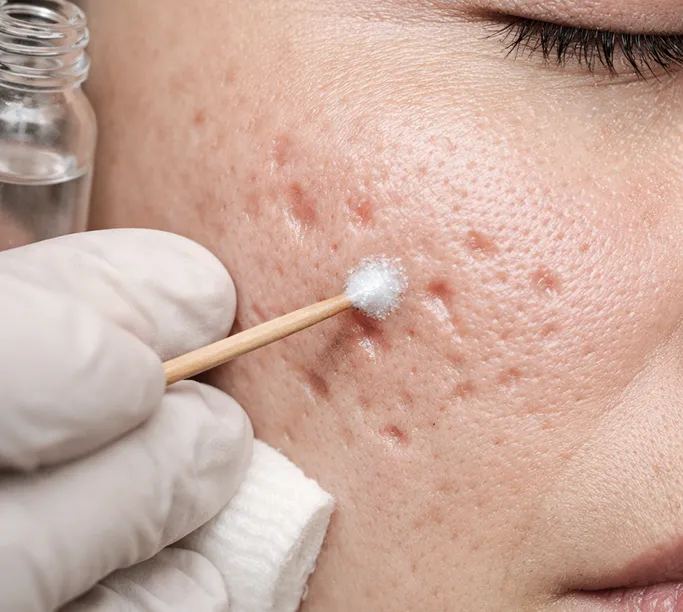
Coagulation
Upon contact with the scar tissue, the concentrated TCA causes immediate protein denaturation and tissue coagulation within the depression. This effectively resets the scarred area by remodelling scar tissue and stimulating collagen production within the base of the scar.
Inflammatory Activation
The controlled injury initiates a localised healing cascade. Immune cells and growth factors are recruited to the site, transforming the static, atrophic scar into an active site of tissue repair.
Dermal Remodelling
As the inflammatory phase subsides, fibroblasts are stimulated to synthesise and deposit new collagen and elastin fibres at the base of the treated area. Over several sessions, this process gradually plumps the floor of the scar, reducing its depth and allowing it to better level with the surrounding healthy skin.
Because this treatment is highly targeted, it allows us to utilise concentrations that would be too intense for full-face application, ensuring that we deliver enough therapeutic energy to induce structural change in deep scars while sparing the surrounding, healthy tissue from unnecessary damage.
How Are TCA CROSS Performed at TSN Dermatology?
The procedure for TCA CROSS at TSN Dermatology is a highly refined, microsurgical-style technique. Because this treatment utilises high-concentration trichloroacetic acid, the precision of delivery is paramount to ensure the chemical acts exclusively within the depth of the scar while preserving the surrounding healthy tissue.

The Procedural Steps
-
Clinical Cleansing
We begin by meticulously removing all surface oils and impurities. A clean, oil-free surface is essential for the acid to penetrate the base of the scar uniformly and reliably. -
Precision Application
Using specialised micro-applicators, a tiny amount of high-concentration trichloroacetic acid is applied directly into the base of each individual scar. You may feel a brief, stinging sensation, which is a normal indicator that the acid is reaching the target depth to initiate the healing cascade. -
Visual Verification
Because we treat each scar individually, we perform the application under magnification. We monitor the skin's biological response in real-time to ensure the chemical energy is focused exactly where needed to trigger structural remodelling. -
Controlled Termination
Once the target area has been treated, the reaction is carefully controlled to prevent spread to surrounding skin.
Expected Recovery and Healing Timeline
The recovery for TCA CROSS is different from a broad-surface chemical peel because it is localised to specific points of treatment.
-
Immediate Aftermath
Following the procedure, the treated scars will appear temporarily blanched or red. This is the initial reaction as the acid begins the process of controlled tissue coagulation. -
Scabbing Phase
Patients will notice small, dark scabs forming specifically at the treated scar sites a few days after the session. This is a vital part of the healing process; these scabs protect the regenerating tissue beneath. -
Natural Shedding
These scabs will generally fall off on their own within 1 to 2 weeks. It is crucial not to pick or force these scabs off, as this could impede the healing process or increase the risk of scarring. -
Healing and Results
Once the scabs shed, there will be some residual redness, which will gradually fade over time as the skin remodels. -
Treatment Course
TCA CROSS is typically performed in a series to achieve optimal results. Sessions can be repeated every 1 to 2 months, with progressive improvement in scar depth and texture becoming more apparent after each session.
Patient Preparation & Aftercare for TCA CROSS
To ensure you receive the maximum therapeutic benefit from your TCA CROSS treatment, we have established clear guidelines for both before and after your procedure. Proper management is essential to optimise your skin's remodelling, ensure a predictable healing response, and protect the treated sites from potential complications.
Pre-Treatment Preparation: Getting Your Skin Ready
Your skin's condition on the day of treatment significantly influences the healing cascade within your scars.
-
Clean and Clear Skin
Please ensure the area to be treated is free of any creams, lotions, perfumes, or cosmetics upon arrival. This ensures the high-concentration acid is applied precisely to the target tissue without interference. -
Pause Active Skincare
For 5-7 days prior to your session, you must pause the use of all active skincare near the treatment sites, including retinoids (Retin-A, retinol), prescription acne topicals, and exfoliating acids. Using these too close to your treatment can lead to excessive irritation. -
Sun Protection
Avoid deliberate sun exposure or tanning for at least 2 weeks before your procedure. Any inflammation or pigmentary instability in the skin can increase the risk of complications during the remodelling phase. -
Medication Awareness
Inform our team of all medications. If you have a history of cold sores in the perioral area, please notify us, as the procedure may necessitate preventative anti-viral medication.
Post-Treatment Aftercare: Supporting the Healing Process
Once your session is complete, your skin enters a delicate phase of tissue remodelling and collagen production. Following these steps is vital to maintaining the structural improvements.
-
The No-Pick Rule
As the treatment sites form scabs, you may feel an urge to touch or remove them. Do not pick, scratch, or manually exfoliate these scabs. Allow them to shed naturally over the next 1-2 weeks. Forcibly removing the scab will disrupt the collagen synthesis happening beneath it and significantly increase the risk of permanent scarring or hyperpigmentation. -
Focal Protection
Keep the treated areas protected with the prescribed healing balm. Apply this gently using a clean finger or sterile applicator to keep the scabs hydrated, which promotes optimal healing. -
Strict Sun Protocol
Because TCA CROSS induces a deep, localised injury, the new skin forming at the base of the scar is extremely vulnerable to UV radiation. In Singapore's tropical climate, you must use a broad-spectrum SPF 50+ sunscreen daily and avoid direct sun exposure on the treated sites until the skin has completely healed. -
Avoid Excessive Heat
For the first 48 hours, avoid environments that induce intense sweating, such as saunas or hot yoga, as excess heat can heighten local inflammation and irritation in the treated areas. -
Treatment Intervals
TCA CROSS is a process of incremental improvement. The remodelling of deep scar tissue takes time. Please strictly adhere to your recommended treatment interval of 1 to 2 months to allow the skin to finish one cycle of collagen regeneration before the next application.
FAQs About TCA CROSS
When performed correctly in a clinical setting, TCA CROSS is designed to level the scar, not create new ones. However, temporary post-inflammatory hyperpigmentation (PIH) is a possible side effect, especially in skin types that are more prone to pigment changes. Strict adherence to sun protection and following our post-procedure aftercare instructions are the most effective ways to minimise this risk.
During the application of the acid, most patients report a brief, sharp stinging or spicy sensation. This is a normal part of the chemical interaction and typically subsides within minutes. If you are particularly sensitive, we can discuss topical numbing options, though most patients find the procedure highly tolerable given the small size of the treatment area.
This is known as frosting. It occurs when the TCA reacts with the proteins in the skin, causing a temporary white appearance. This is a visual indicator that the acid has reached the intended depth within the scar base. The frosting will subside within a few hours and transition into the scabbing phase.
Yes. We often recommend a multi-modal approach for comprehensive scar correction. For example, we may combine TCA CROSS to address deep ice-pick scars with subcision (to release tethered scars) or fractional laser resurfacing (to improve the surrounding skin texture). Your dermatologist will create a personalised treatment plan during your consultation.
Because TCA CROSS induces structural changes at the dermal level, improvement is cumulative. Most patients require a series of 3 to 6 sessions, typically spaced 1 to 2 months apart, to allow sufficient time for the body’s collagen synthesis process to fill in the depressions.
Seek Proper Dermatologist Care for Deep Acne Scars
If you are struggling with deep acne scars such as ice-pick or boxcar scars, targeted treatments like TCA CROSS can offer meaningful improvement. At TSN Dermatology Skin Specialist Clinic, our doctors provide personalised assessments to determine the most appropriate approach for your specific scar type and skin condition. Speak with our team to learn whether TCA CROSS is suitable for you, or schedule a consultation to begin a structured treatment plan towards smoother, more refined skin.

Senior Consultant Dermatologist
Bachelor of Medicine, Bachelor of Surgery (MBBS)
Member of the Royal College of Physicians (United Kingdom)
Master of Medicine (Internal Medicine)
Fellow of the Academy of Medicine, Singapore (Dermatology)
Dr Koh Hong Yi is a Ministry of Health-accredited dermatologist with over 20 years of experience in medical, surgical and aesthetic dermatology.
He trained in Singapore and the UK, and is particularly interested in TCA CROSS, Mohs micrographic surgery, dermatologic surgery, skin cancer care, and inflammatory skin diseases.
Prior to private practice, he founded the Mohs Surgery Service at Singapore General Hospital and served as consultant dermatologist and Adjunct Assistant Professor with Duke-NUS Medical School, contributing to clinical research and education.
About Dr Koh
