
 +65 64766821
Get In Touch
+65 64766821Book An Appointment
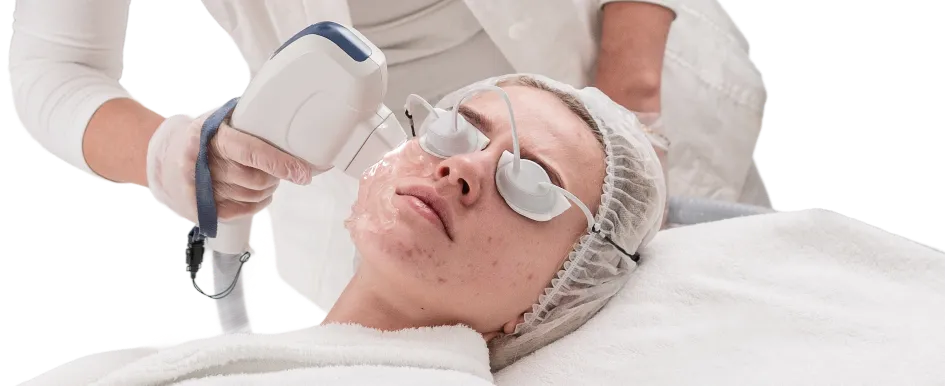
Phototherapy in Singapore

Dr Koh Hong Yi
Senior Consultant Dermatologist
 MBBS (Singapore), MRCP (UK), MMed (Internal Medicine), FAMS (Dermatology)
Dr Tham Siew Nee
Senior Consultant Dermatologist
MBBS (Adelaide), MMed (Internal Medicine), FAMS (Dermatology)At TSN Dermatology, we understand that skin conditions like eczema, psoriasis, and vitiligo are more than just cosmetic—they significantly impact your comfort, confidence, and quality of life. Our approach combines accurate diagnosis with evidence-based, personalised treatment plans tailored to Singapore's tropical climate and your unique medical history.



What Is Phototherapy?
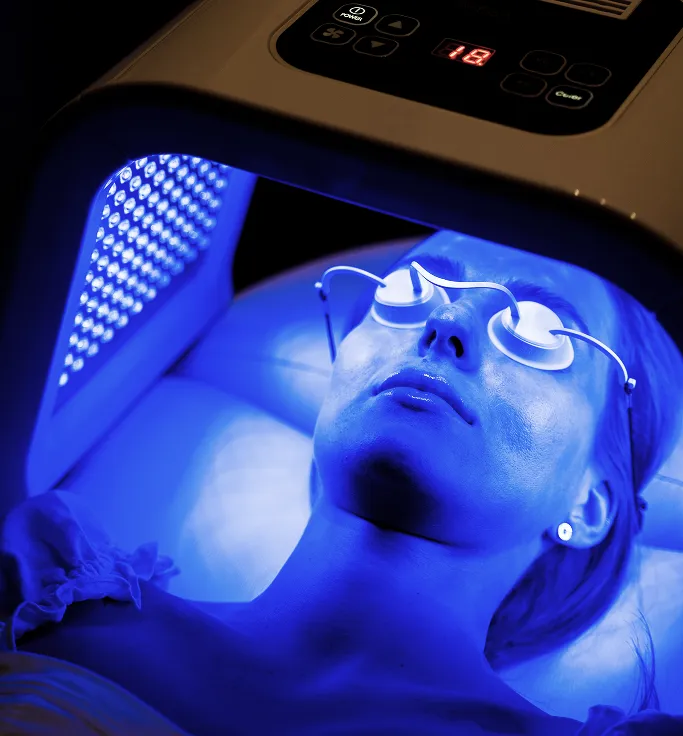
Phototherapy, often called light therapy, is a cornerstone of advanced dermatological care. It is a highly specialised medical treatment that harnesses the healing properties of ultraviolet radiation (UVR) to manage chronic, inflammatory skin conditions, most notably eczema, psoriasis, and vitiligo. While UVR is a natural component of sunlight, clinical phototherapy is fundamentally different from sun exposure. Sunlight is a broad-spectrum source containing a wide array of wavelengths; many of these are therapeutically ineffective, while others (such as certain UVA rays) are primarily responsible for premature skin ageing, DNA damage, and an increased risk of skin cancer.
At TSN Dermatology, we utilise Narrowband UVB (NB-UVB), which represents the current gold standard in light therapy. By filtering the light to isolate a very specific, narrow wavelength (311–313 nm), we can deliver the precise dose required to stimulate healing while filtering out the harmful, non-therapeutic parts of the spectrum. This precision allows us to achieve clinical clearance with a significantly improved safety profile compared to older methods like broadband UVB or UVA-based therapies.
How does Phototherapy Work?
Phototherapy operates on the principle of immune modulation, treating the skin as an active immune organ rather than just a passive physical barrier. In many chronic dermatological conditions, such as psoriasis, eczema, and vitiligo, the skin's immune system is essentially stuck in a cycle of overactivity. When specific immune cells (T-lymphocytes) become hyper-responsive, they mistakenly identify skin tissue as a threat, triggering a cascade of inflammatory chemicals that manifest as persistent redness, intense itching, painful swelling, and rapid, abnormal cell growth. Phototherapy uses precise, narrow wavelengths of ultraviolet light to intercept these inflammatory pathways.
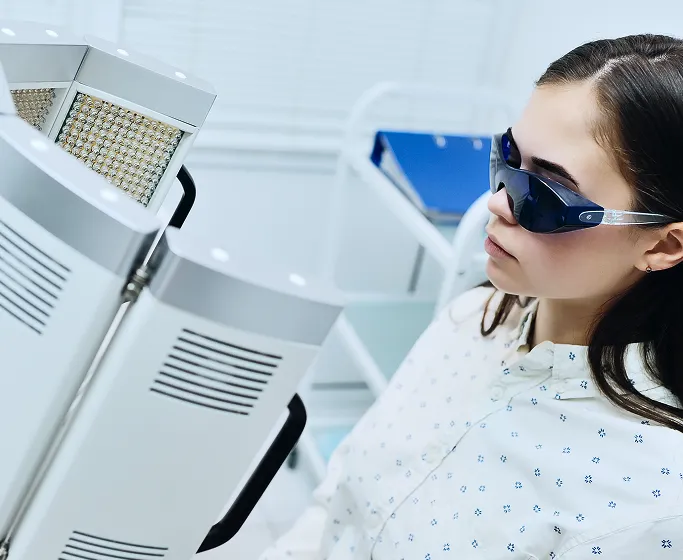
When these calibrated light rays penetrate the epidermis, they are absorbed by the overactive T-lymphocytes. This absorption induces a controlled, therapeutic suppression, effectively quieting the immune system's local reaction and stopping the inflammatory signals at their source. Beyond simply suppressing the immune response, phototherapy also recalibrates cellular dynamics. For instance, in psoriasis, where skin cells divide at an unnaturally rapid pace, the light energy interferes with this hyper-proliferation, signalling the cells to resume a normal, healthy growth cycle. For patients with vitiligo, the mechanism shifts toward stimulation; the targeted light energy wakes up dormant pigment-producing melanocytes, encouraging them to migrate and restore natural skin colour. By focusing exclusively on the specific wavelength that reaches the necessary skin depth, phototherapy provides a controlled reset for the skin, allowing inflammation to subside, the protective barrier to repair, and the skin to return to a calm, resilient state.
How is Phototherapy Performed?
The phototherapy process at TSN Dermatology is designed to be systematic, efficient, and highly controlled. We utilise a full-height, full-body cabin unit that completely surrounds you while you stand within, ensuring that the therapeutic ultraviolet light provides uniform coverage across your entire body.

Preparation
Treatment Duration
Frequency and Consistency
Maintenance
Ongoing Calibration
Patient Preparation & Aftercare for Phototherapy
To ensure you receive the maximum therapeutic benefit from your Narrowband UVB (NB-UVB) sessions, we have established clear guidelines for both before and after your treatment. Proper skin management helps stabilise your barrier, improves light absorption, and minimises the risk of irritation.
Pre-Treatment Preparation: Getting Your Skin Ready
Your skin's condition on the day of treatment significantly influences how it responds to the light.
-
Clean and Clear Skin
Please ensure the areas being treated are clean and free of any creams, lotions, perfumes, or cosmetics unless explicitly instructed otherwise. These products can create a film on the skin that acts as a physical barrier, potentially blocking the UV light or causing uneven absorption. -
Sun Protection
Avoid deliberate or unprotected sun exposure on the days leading up to your treatment. Because your clinical dose is precisely calculated, accidental sunburn from natural sunlight can lead to over-exposure and increased discomfort. -
Medication Awareness
Certain medications and supplements (including some antibiotics, anti-inflammatories, and herbal remedies) can induce photosensitivity, making your skin react more strongly to light. Please provide us with an updated list of all medications, topicals, and supplements you are currently using. -
What to Wear
Wear loose-fitting clothing that is easy to remove and put back on. Since you will be standing in the light cabinet, comfort is key. We will provide protective goggles, which must be worn at all times while in the unit, to shield your eyes from UV radiation.
Post-Treatment Aftercare: Supporting the Healing Process
Once your session is complete, your skin begins the process of immune resetting. Supporting this recovery is essential to maintaining your progress.
-
Cooling Down
If you feel a sensation of warmth or mild tingling (similar to a light sunburn) after your session, a cool shower when you reach home can provide immediate relief. Avoid using harsh soaps or loofahs, which may irritate the skin. -
Aggressive Moisturising
Post-treatment dryness is the most common side effect. Apply a liberal amount of fragrance-free, medical-grade moisturiser within 10-15 minutes of your cool shower while your skin is still slightly damp. This locks in moisture and helps repair the skin barrier. -
Managing Redness
If you notice mild redness (erythema) 6-24 hours after a session, this is usually a normal part of the process. However, if the redness is accompanied by pain, blistering, or swelling, please contact our clinic immediately. We will adjust your dosage for the next session. -
Continued Sun Protection
Your skin is more sensitive on treatment days. When heading back out into Singapore's tropical sun, protect treated areas with UV-protective clothing or shade. Avoid additional intentional UV exposure (like sunbathing) on your non-treatment days, as this undermines the controlled nature of your medical phototherapy. -
Consistency is Key
Do not skip sessions. The therapeutic effect of NB-UVB is cumulative; the immune modulation happens because of the frequency of exposure. If you are going to be away or have a scheduling conflict, let our clinic coordinator know as soon as possible so we can adjust your treatment plan accordingly.
What Are The Side Effects of Phototherapy?
Phototherapy is a well-established and generally very safe treatment option. Because the ultraviolet light is fully absorbed by the superficial layers of the skin, there is no risk of the treatment affecting internal organs, such as the liver or kidneys, making it an excellent choice for patients who cannot take systemic medications. While side effects are typically mild and temporary, they may include:
Common Short-Term Reactions
It is normal to experience a sensation of warmth, mild dryness, or temporary redness after a session. These reactions usually resolve within 24 hours and can be easily managed by taking a cool shower upon returning home and applying generous amounts of fragrance-free, medical-grade moisturiser.
Skin Sensitisation
You may develop a natural tan after multiple sessions. In rare cases, some patients may experience a sunburn-like reaction; if this occurs, we will adjust your next dosage accordingly to ensure comfort.
Long-Term Considerations
As with any UV exposure, there is a theoretical possibility of premature skin ageing over many years of continuous treatment. To mitigate this, we strongly advise all patients to avoid excessive sun exposure on their non-treatment days.
Risk Profile
While older forms of light therapy, such as PUVA (which used psoralen medications combined with UVA light), were associated with a small, long-term risk of skin cancer after years of cumulative use, our current Narrowband UVB technology is significantly safer. For the short-term treatment courses usually required to manage most inflammatory skin conditions, the clinical risk is minimal. We perform regular skin examinations to ensure your long-term health is prioritised throughout your treatment journey.
FAQs About Phototherapy
No. While both use light, they work differently. Lasers typically use a single, highly concentrated beam of light to perform a specific action, like vaporising a lesion or targeting a blood vessel. Phototherapy uses a broad but carefully measured spectrum of light to cover larger areas of the skin, acting as an immune modulator to calm inflammation or slow down rapid cell growth.
When performed under the direct supervision of a dermatologist, phototherapy is safe and is a standard of care for many chronic conditions. Side effects are generally mild and may include temporary redness, dryness, or a sensation similar to a light sunburn. We monitor your cumulative UV exposure closely to ensure your long-term skin health.
No. During a session, you will typically stand inside a specialised cabinet or sit near a light panel for a few minutes. You may feel a slight warmth, but the procedure itself is painless. If you feel any discomfort or burning after a session, please let your dermatologist know immediately so we can adjust your dosage.
This is something we discuss on a case-by-case basis. While narrowband UVB phototherapy is generally considered safe during pregnancy, we prioritise topicals or other non-light treatments whenever possible. If you are pregnant or planning to become pregnant, please share this information with your dermatologist during your consultation.
Yes. On the days you receive phototherapy, we strongly recommend avoiding additional sun exposure. Because your skin is already receiving a therapeutic dose of UV light, further exposure can lead to over-treatment, redness, or a sunburn effect. We also advise wearing protective clothing and sunscreen on non-exposed areas to minimise unnecessary UV intake.
Yes. Some medications, including certain antibiotics, anti-inflammatory drugs, and even herbal supplements, can make your skin extra sensitive to light (photosensitivity). It is critical that you provide us with an updated list of all medications, supplements, and topicals you are using before starting phototherapy.
Personalised Phototherapy Care by Dermatologist
If you or your child are considering phototherapy treatment, a consultation with our specialists at TSN Dermatology Skin Specialist Clinic can help clarify the diagnosis and explore suitable treatment options based on your individual needs. For more information or to book an appointment, contact us today.

Senior Consultant Dermatologist
Bachelor of Medicine, Bachelor of Surgery (MBBS)
Member of the Royal College of Physicians (United Kingdom)
Master of Medicine (Internal Medicine)
Fellow of the Academy of Medicine, Singapore (Dermatology)
Dr Koh Hong Yi is a Ministry of Health-accredited dermatologist with over 20 years of experience in medical, surgical and aesthetic dermatology.
He trained in Singapore and the UK, and has a particular interest in phototherapy, Mohs micrographic surgery, dermatologic surgery, skin cancer care, and inflammatory skin diseases.
Prior to private practice, he founded the Mohs Surgery Service at Singapore General Hospital and served as consultant dermatologist and Adjunct Assistant Professor with Duke-NUS Medical School, contributing to clinical research and education.
About Dr Koh
